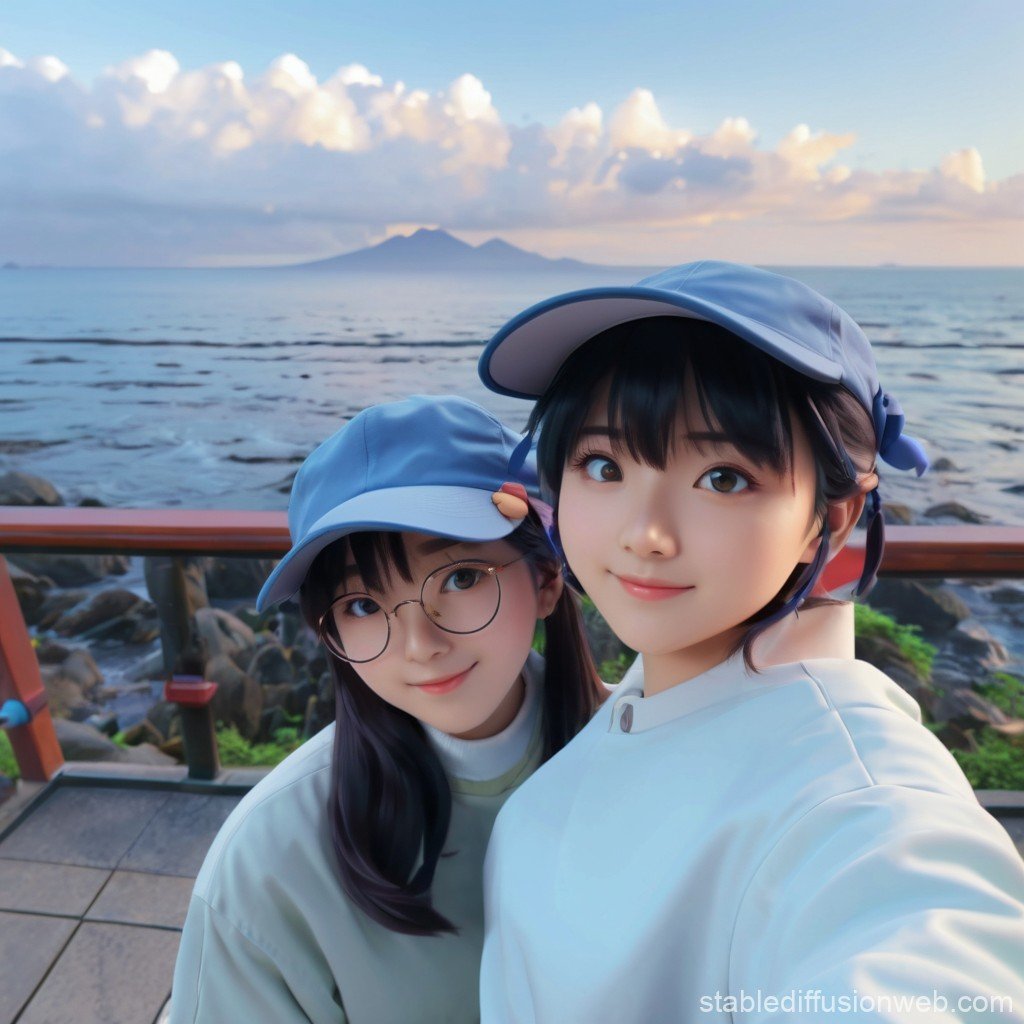
The shimmering landscapes and heartfelt narratives of Studio Ghibli have long captivated audiences worldwide, establishing an artistic legacy built on painstaking human craftsmanship. But what happens when artificial intelligence starts mimicking this beloved aesthetic, generating "Ghibli-style" art with a few clicks? This isn't just a technical marvel; it's a rapidly unfolding ethical and legal minefield that touches the very core of artistic integrity and copyright law. Hayao Miyazaki himself has voiced his profound disapproval, famously calling AI-generated art "an insult to life itself." The debate isn't going away, and understanding its nuances is crucial for creators, consumers, and technologists alike.
At a Glance: The Ghibli AI Art Conundrum
- The Core Conflict: AI can now easily replicate Studio Ghibli's distinctive style, challenging long-held notions of originality and artistic ownership.
- Miyazaki's Stance: The legendary director vehemently opposes AI art, seeing it as disrespectful to human creativity and the essence of life.
- Copyright Hurdles: Existing laws protect expression, not just ideas. Replicating a unique style, especially with specific elements, can constitute copyright infringement as a "derivative work."
- Training Data Concerns: A major legal flashpoint is whether AI models are trained on copyrighted Ghibli works without permission, threatening the brand's value.
- "Fair Use" Debate: AI companies often argue that training on copyrighted content is "transformative" and falls under fair use, but legal clarity is sorely lacking.
- The 3 C's: A comprehensive framework is emerging around Consent (artists' right to opt out), Credit (attribution), and Compensation (payment for use of work).
- OpenAI's Shift: The company recently disabled generating images in the style of living artists, including Ghibli, highlighting the industry's struggle to adapt.
- Evolving Landscape: Laws are playing catch-up. Future rulings will shape how AI interacts with creative works, demanding global dialogue.
The AI Art Revolution Meets Ghibli's Sacred Craft
Imagine generating a stunning, serene landscape that looks straight out of a Miyazaki film, complete with gentle pastels, whimsical characters, and an underlying sense of wonder. Thanks to powerful AI models like OpenAI's GPT-4o, this isn't science fiction; it's a widely accessible reality. These tools allow users to transform prompts into high-quality images that bear an unmistakable resemblance to Studio Ghibli's iconic animation.
On one hand, this represents a breathtaking leap in technological capability, democratizing art creation and allowing enthusiasts to explore imaginative new frontiers. On the other, it strikes at the heart of what makes Studio Ghibli's work so revered: decades of meticulous human craftsmanship, unique storytelling, and an unparalleled artistic vision. This collision between innovative automation and deeply personal artistry sets the stage for a complex discussion about rights, ethics, and the future of creativity itself.
Decoding Copyright: When Does "Ghibli-Style" Become Infringement?
At the core of the Ghibli AI art debate lies copyright law, a framework designed to protect original works of authorship. But these laws were crafted long before neural networks could mimic human creativity, leaving many questions unanswered.
The Idea-Expression Dichotomy
A fundamental principle in copyright is the "idea-expression dichotomy." Simply put, copyright protects the expression of an idea, not the idea itself. For instance, the idea of a magical forest spirit isn't copyrightable, but the specific visual design of a Kodama from Princess Mononoke absolutely is.
When AI generates art "in the style of" Ghibli, it walks a fine line. If it merely imitates general stylistic elements—like soft lighting, detailed natural backdrops, or a certain character aesthetic—without copying specific copyrighted characters, compositions, or plot devices, it might not be considered infringement. However, the closer an AI-generated image gets to replicating specific protected elements, characters, or unique compositional tropes, the more likely it ventures into legally problematic territory.
Derivative Works and Section 106
Under the U.S. Copyright Act, Section 106 grants creators exclusive rights, including the right to prepare "derivative works." A derivative work is a new creation based on one or more pre-existing works. Think of a film adaptation of a book, or a sculpture based on a painting.
Here’s where AI-generated Ghibli art faces scrutiny. If an AI model, by design or training, produces images that are essentially new versions or adaptations of Ghibli's copyrighted works—even if subtly altered—they could be considered unauthorized derivative works. This is especially true if such creations are used commercially, potentially diluting the original brand's value or confusing consumers. The very existence of tools designed to create Free Ghibli AI generators highlights how readily these stylistic transformations can occur, making the legal implications more pressing.
Training Data: The Silent Debate
Perhaps the most contentious aspect of AI-generated art is the training data itself. AI models learn by ingesting vast quantities of existing images, text, and other media. The critical question: were copyrighted Studio Ghibli works, or works heavily influenced by Ghibli, used to train these models without explicit authorization?
If an AI company used Ghibli's entire filmography, concept art, or other copyrighted materials to "teach" its model the Ghibli aesthetic, without obtaining licenses or permission, it could face serious legal challenges. Such unauthorized use not only constitutes a potential direct infringement but also threatens to devalue Ghibli's brand and the economic rights of its creators. The Berne Convention and various national copyright acts (like the U.S. and Indian Copyright Acts) grant creators exclusive rights, and unauthorized data ingestion for training arguably bypasses these protections.
The Murky Waters of "Fair Use" in the Age of AI
AI companies frequently invoke the "fair use" doctrine as a defense against claims of copyright infringement, particularly concerning their training methods. Fair use is a legal doctrine that permits limited use of copyrighted material without acquiring permission from the rights holders. It's a critical balancing act, allowing for creative freedom, criticism, and education while protecting creators.
The Four Factors of Fair Use
In the U.S., courts typically weigh four factors to determine if a use is fair:
- Purpose and Character of the Use: Is the use commercial or non-profit educational? Is it "transformative"? This is a key battleground, with AI companies arguing that training models on data, even copyrighted data, is transformative because it creates a new tool, not merely a copy.
- Nature of the Copyrighted Work: Is the original work factual or creative? Creative works generally receive stronger protection.
- Amount and Substantiality of the Portion Used: How much of the copyrighted work was used, and was it the "heart" of the work? While AI training might ingest entire libraries, it doesn't necessarily reproduce specific works directly in its output. However, the essence of the work is undeniably consumed.
- Effect of the Use Upon the Potential Market for or Value of the Copyrighted Work: Does the new use harm the market for the original work or its derivatives? If AI-generated Ghibli-style art competes directly with Ghibli's licensed products or commissioned works, it could be seen as damaging.
Why AI Companies Lean on Fair Use
AI developers argue that training models is akin to a human artist studying countless existing works to learn and develop their own style. They contend that the AI doesn't store exact copies of the images, but rather learns patterns and relationships, making the output "transformative." They also argue that individual instances of copyrighted works within massive training datasets are too small or fleeting to constitute infringement.
However, critics, including many artists and legal scholars, push back. They argue that the scale of AI ingestion—billions of images—and the commercial intent behind many AI models fundamentally differ from a human artist's learning process. They also highlight that if AI can devalue the market for human artists by offering a cheaper, faster alternative, then the "effect on the market" factor weighs heavily against fair use.
The EU vs. US Stance
The legal landscape surrounding AI training is far from uniform globally. The EU's Copyright Directive, for example, includes provisions for text and data mining (TDM), permitting it for scientific research but requiring an opt-out mechanism for copyright holders for other uses. This gives creators a path to prevent their works from being used for AI training. U.S. copyright law, by contrast, lacks such explicit regulations for AI training, leaving courts to interpret existing laws in unprecedented ways. This creates a patchwork of legal opinions, with future court rulings or new regulations potentially requiring AI companies to obtain licenses or pay royalties.
The Artist's Perspective: A Fight for Consent, Credit, and Compensation
Beyond the dry legal definitions, the heart of the Ghibli AI art debate pulsates with the anguish of creators. For many, it's not just about copyright; it's about existential threats to their livelihoods, dignity, and the very definition of art.
Miyazaki's "Insult to Life Itself"
Hayao Miyazaki's visceral reaction to AI art—calling it an "insult to life itself"—encapsulates this sentiment perfectly. Studio Ghibli's legacy is built on the meticulous, handcrafted animation techniques, the individual talent of its artists, and the soul poured into every frame. For an algorithm to replicate that style, especially without permission or acknowledgment, feels like a deep violation, trivializing years of human effort and artistic development. It asks: if a machine can effortlessly replicate a unique style, what becomes of the human endeavor, the passion, and the struggle that forged it?
OpenAI's Response and the "Opt-Out" Principle
The widespread criticism, particularly from artists and high-profile figures like Miyazaki, has not gone unnoticed. OpenAI, a leading AI developer, recently responded by disabling the ability to generate images "in the style of living artists," including specific styles like Studio Ghibli's. This move, while a positive step, underscores the validity of the concerns and points to a growing industry recognition of the need for artists' rights.
This action hints at the future framework for AI and art: the "opt-out" principle. It suggests that artists should have the fundamental right to decide whether their unique creative output can be used to train AI models. Without this consent, the system risks becoming a parasitic one, feeding off human creativity without permission.
The 3 C's: Consent, Credit, Compensation
The Ghibli AI art dilemma has crystallized the urgent need for a comprehensive framework that addresses three critical pillars for creators in the age of AI:
- Consent: Artists must have the explicit right to decide if their works are used for AI training. This moves beyond implicit "fair use" arguments and empowers creators to protect their intellectual property and artistic legacy. An opt-out mechanism, or even an opt-in for specific projects, could be part of this.
- Credit: When AI output is undeniably influenced by or derived from numerous creators, there's a strong ethical argument for fair attribution. While complex to implement for models trained on billions of images, solutions might involve acknowledging the "dataset contributors" or flagging AI-generated content as such, perhaps with a link to foundational artists if discernible.
- Compensation: Should artists be compensated if their work is used to train machines that then generate revenue for AI companies or users? This is arguably the most challenging and critical aspect. If AI models extract value from existing art to create new, monetizable outputs, a royalty system or licensing model could ensure artists are fairly remunerated for their foundational contributions. This would help prevent the devaluation of human artistry and sustain creative careers.
Navigating the Ethical Minefield
Beyond the letter of the law, the "Ghibli-style AI art" controversy delves into profound ethical questions about art, originality, and the human spirit.
Devaluation of Human Artistry
One of the most pressing ethical concerns is the potential for devaluing human artistry. If unique artistic styles can be replicated instantly and cheaply by machines, what incentive remains for humans to spend years honing their craft, developing a distinctive voice, and pouring their soul into creation? The struggle, the learning, the individual mistakes that lead to breakthroughs—these are all part of the human artistic journey. AI sidesteps this journey, risking a future where art becomes a commodity produced by algorithms, rather than a profound expression of the human experience.
Authenticity vs. Automation
The debate also highlights the tension between authenticity and automation. An authentic Ghibli piece is a reflection of Miyazaki's unique vision, hand-drawn by dedicated animators. An "AI Ghibli" piece, no matter how visually convincing, lacks that direct human connection, the narrative intent, and the painstaking labor that imbues the original with meaning. For many, art's value isn't solely in its aesthetics, but in its provenance, its story, and the human emotion it embodies. AI challenges us to redefine what "authentic" means in a world where mimicry is instantaneous.
Who Owns the "Soul" of a Style?
Can a style, an aesthetic, truly be owned? While copyright protects specific expressions, the very concept of "Ghibli style" is more than just a set of techniques; it's a feeling, a philosophy, a universe built over decades. When AI replicates this, it's not just copying brushstrokes; it's tapping into the cultural resonance and emotional impact built by human effort. The ethical question then becomes: who has the right to exploit that collectively recognized "soul" of an art style, especially when the original creators feel their legacy is being disrespected?
What Does the Future Hold for AI and Artistic Integrity?
The "Ghibli AI art" dilemma is a microcosm of a much larger societal reckoning. The legal and philosophical challenges it presents demand not just a quick fix, but a fundamental evolution of how we perceive and regulate creativity in the digital age.
Evolving Legislation and Court Rulings
Existing copyright laws, designed for a pre-AI world, are clearly struggling to keep pace. We are likely to see a flurry of court cases in the coming years, establishing precedents that will shape the legal landscape for AI-generated works. These rulings could clarify:
- Definition of "Originality" in AI Art: What level of human input is required for an AI-generated work to qualify for copyright protection?
- Liability for Training Data: Who is responsible if an AI model is trained on copyrighted material without permission—the AI developer, the user, or both?
- Scope of Fair Use: How broadly will "transformative use" be interpreted in the context of AI training and output?
Beyond courtrooms, legislative bodies worldwide will increasingly be compelled to enact new laws or amend existing ones to address AI-specific challenges. This could include mandatory licensing for training data, clear attribution requirements, and compensation models for artists.
The Need for a Global Dialogue
This isn't a problem a single nation or industry can solve in isolation. The internet is borderless, and AI models are trained on global datasets, impacting artists worldwide. A collective, global conversation among creators, technologists, legal experts, policymakers, and consumers is essential. This dialogue needs to define:
- The balance between technological innovation and the protection of artistic integrity.
- Ethical guidelines for the development and deployment of generative AI.
- Mechanisms for transparency in AI training data.
- Fair and equitable compensation systems for creators whose works contribute to AI advancement.
Practical Steps for Creators and Consumers
For creators, understanding these evolving dynamics is paramount. Exploring options for registering works, participating in collective rights management, and advocating for stronger legislative protections are crucial steps. For consumers, the choice to support human artists directly, to question the provenance of AI-generated content, and to engage critically with AI tools will play a significant role in shaping market demand and ethical standards.
Your Role in the Evolving Landscape
The debate around the legality and ethics of Ghibli-style AI art isn't just for lawyers and tech giants; it's a conversation that impacts anyone who values creativity. Whether you're an artist wrestling with the implications, a technologist building new tools, or simply a fan of Studio Ghibli's enchanting worlds, your awareness and participation matter.
As AI continues to blur the lines between human and machine creativity, the challenge is to find a path that fosters innovation without undermining the foundational rights and irreplaceable value of human artistry. It's about drawing the line between artistic tribute and outright appropriation, ensuring that the magic of art, in whatever form it takes, continues to inspire and enrich our lives, with due respect to its origins.